European Supply Chains in Focus: Last-Week Movements and Next-Week Opportunities
Are European supply chain managers ready for the week ahead? Recent events have intensified the need for agile planning, data-driven decisions, and cross-functional collaboration. Here’s what happened last week, what could unfold next week, and how to act now with Tradecloud’s platform.
Recent supply chain events shaping Europe
Last week brought a mix of resilience and volatility across European logistics corridors. Industry analytics point to continued demand recovery in consumer and industrial segments, while operational bottlenecks at some hubs test planning accuracy. For European managers, this underscores the need for end-to-end visibility and flexible contracts.
- Diversification and nearshoring gains traction as firms re-evaluate exposure to distant suppliers and look to European and regional alternatives.
- Digitization of customs and handoffs accelerates
- Multi-modal shifts – greater use of rail and short-sea shipping to reduce last-mile risk
Geopolitical issues impacting supply chains
Geopolitics continues to shape Europe’s supply chains. The coming weeks will likely bring new policy signals and compliance considerations that influence sourcing and routing decisions. European managers should monitor energy security, sanctions regimes, and regionalization trends.
- Energy diversification and LNG supply impact procurement calendars and carrier selection.
- Export controls and sanctions compliance create onboarding frictions but also opportunities for more resilient supplier networks.
- Nearshoring and regional supplier development in Western and Central Europe reduce transport times and single points of failure.
Commodity and container price dynamics
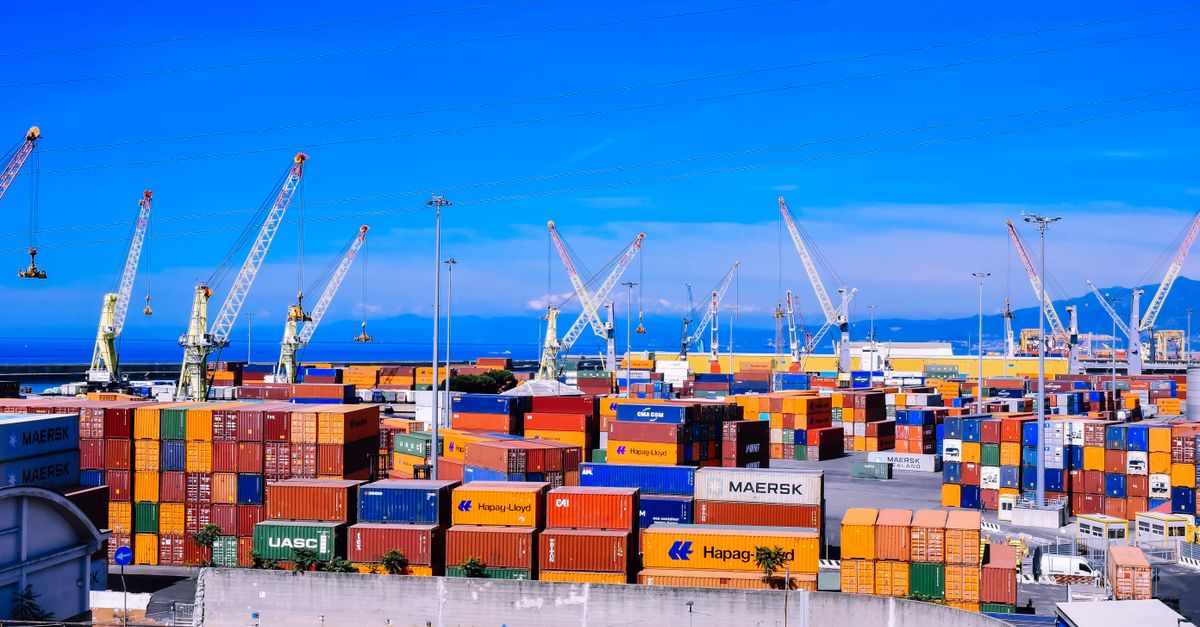
Commodity markets and container rates continue to swing, shaping total cost of ownership for European operations. In the coming week, watch for shifts driven by demand signals, policy actions, and global energy markets.
- Container freight volatility persists as capacity adjustments and port congestion influence spot rates; forward hedges help stabilize budgets.
- Metal and energy-linked materials experiences price moves that affect BOMs and supplier negotiations.
- Procurement strategies are shifting toward dynamic pricing, shorter lead times, and more frequent renegotiations to protect margins.
The Flow-Efficiency KPI theory gaining attention
A KPI-theory gaining notable traction in supply chain discourse is the emphasis on flow efficiency as a complement to traditional throughput metrics. It focuses on time-to-value and waste reduction, aligning with Tradecloud’s end-to-end visibility and data-driven decisions.
- Definition: Flow efficiency measures the ratio of value-added time to total lead time, revealing bottlenecks and non-value-added activity often hidden by throughput metrics.
- Measurement: Map end-to-end processes, capture activity durations, and compute FE per product family; overlay with service levels to identify high-impact improvement areas.
- Implementation: Run a controlled pilot, deploy digital twins and real-time dashboards, and align incentives around improving flow in addition to throughput.
Actionable takeaways for next week:
- Prioritize end-to-end visibility across critical lanes using Tradecloud to spot bottlenecks early.
- Pair diversification with near-term contracts that allow flexible capacity and pricing.
- Experiment with a Flow Efficiency pilot to balance speed and inventory, and track FE alongside traditional KPIs.